News
Mitochondrial Ca2+ signaling: A metabolic rheostat defining tumor and immune cell fate
Trends immunol 2026 Jun 25:S1471-4906(26)00137-7. doi: 10.1016/j.it.2026.05.012. Online ahead of print.
https://www.sciencedirect.com/science/article/pii/S1471490626001377
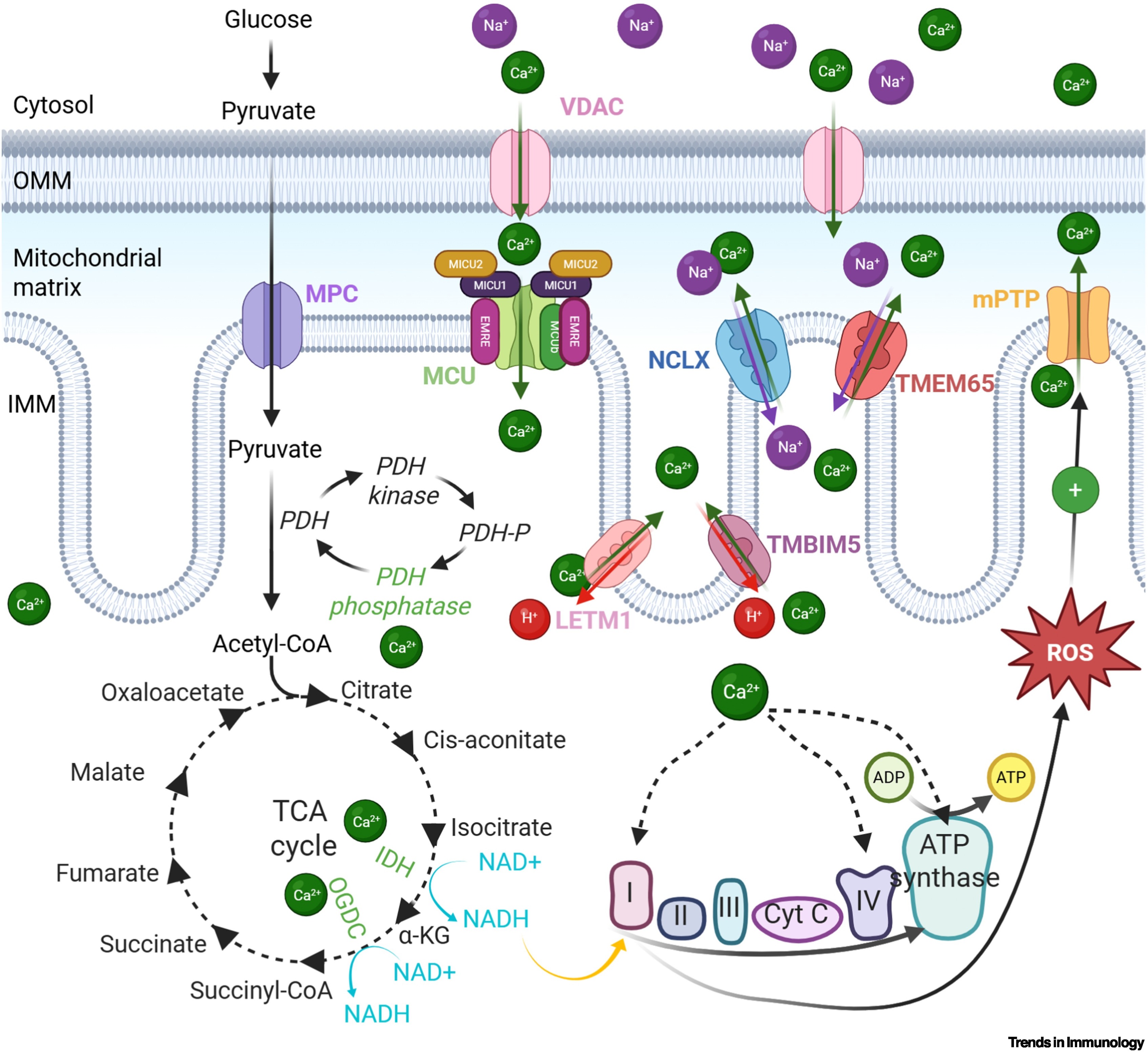
Mitochondrial calcium (mtCa2+) has long been framed as a bioenergetic regulator, yet evidence redefines it as a relevant immunometabolic switch. Within the tumor microenvironment, the mitochondrial calcium uniporter (MCU) complex and the NCLX-TMEM65 efflux axis maintain a 'Goldilocks zone' of Ca2+ homeostasis. This can be exploited by cancer cells to sustain oxidative phosphorylation and tricarboxylic acid-derived oncometabolite production, including succinate, fumarate, and 2-hydroxyglutarate, while imposing ionic and nutrient constraints on infiltrating immune cells. Chronic mtCa2+ overload in effector T cells drives mitochondrial dysfunction and exhaustion, while oxidative phosphorylation-dependent Ca2+ flux enforces the acquisition of an immunosuppressive profile in macrophages. Disrupting these tumor-immune ionic imbalances through selective MCU modulation or efflux pathway targeting offers a strategy to restore immune surveillance and/or enhance immune checkpoint inhibitor therapies.